Latest Qatar Traffic Laws You Should Know


 April 28, 2026 11:47 am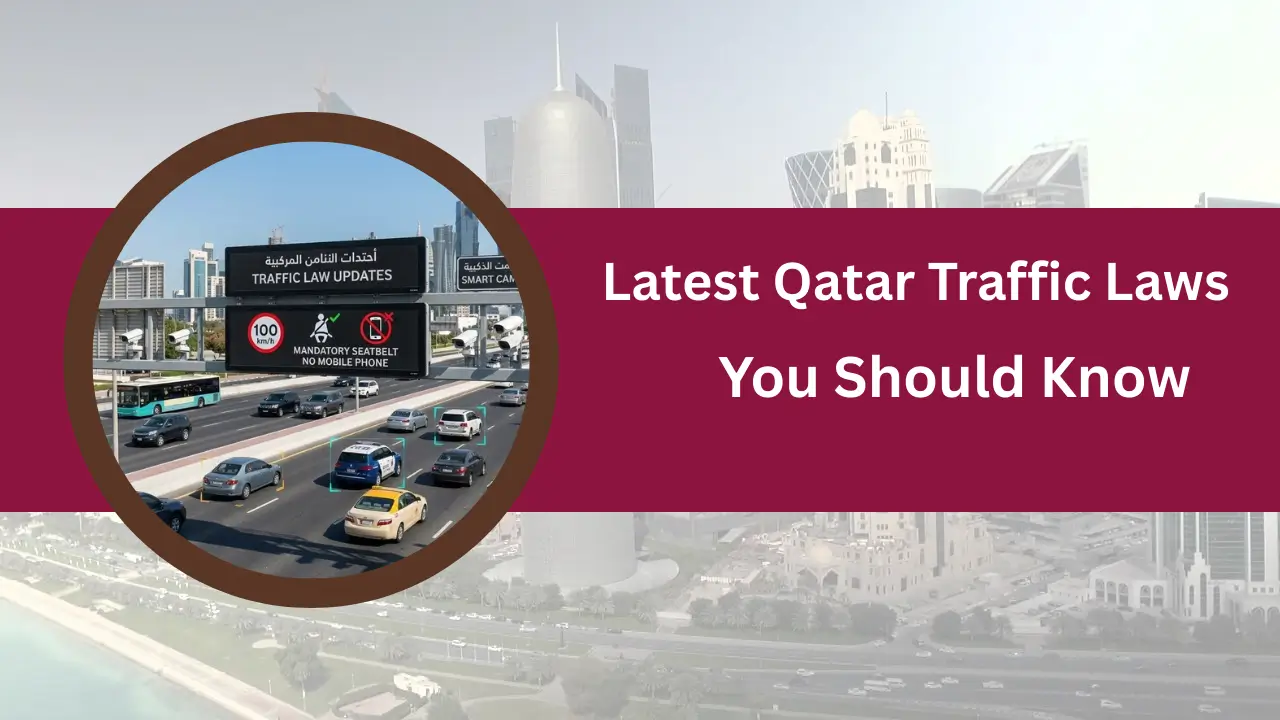
If you live or drive in Qatar, staying updated on traffic laws is not optional – it is essential. The rules have changed significantly, and the enforcement systems behind them are smarter than ever.
This guide walks you through everything you need to know, from fines and black points to travel restrictions and camera systems, so you can stay safe, legal, and fine-free on Qatar’s roads.
Mandatory Clearance for Travel (Qatar Traffic Laws)
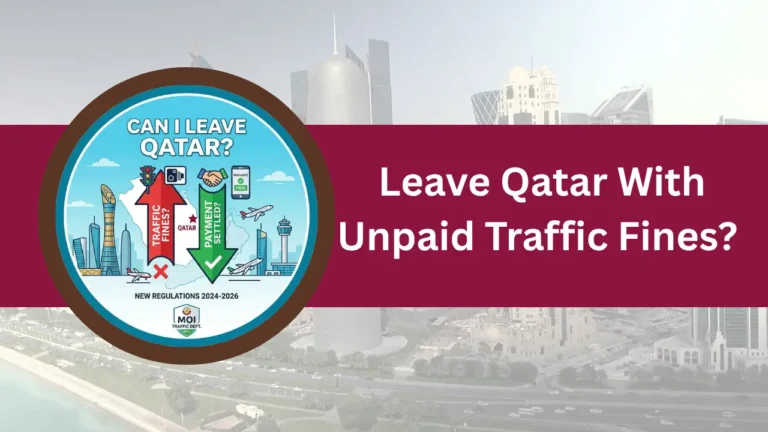
One of the biggest 2026 updates has nothing to do with driving itself – it is about what happens when you try to leave the country.
Residents and visitors are now legally barred from exiting Qatar if there are outstanding traffic fines linked to their QID or vehicle. This applies whether you are leaving by air, land, or sea. Immigration systems at Hamad International Airport are synced in real time with the MOI traffic database, so unpaid fines surface the moment you reach the checkpoint.
How to avoid travel problems:
- Settle all fines through the Metrash2 app or the MOI website
- Make sure payment is completed at least 24 hours before travel
- Check your record weekly – automated fines can arrive without warning
Do not wait until you are at the airport to find out you have an outstanding violation. That is a situation that is entirely avoidable.
AI-Powered Smart Camera Surveillance
Qatar has upgraded its entire road network with what are called Unified Radar Systems. These are not just speed cameras. They use Artificial Intelligence to detect multiple violations at the same time, with no human intervention needed.
What these cameras can detect simultaneously:
- Seat belt compliance monitors both the driver and front-seat passenger
- Mobile phone usage detects holding a device even at a red light
- Lane discipline issues fines for crossing solid lines or turning from the wrong lane
- Speeding tracks speed across all road types
- Read Also:moi tarffic violation
The cameras operate quietly. There is no flashing light or obvious housing. The fine arrives later, which is exactly what makes drivers underestimate how thorough the system actually is.
Using Mobile Phones While Driving Is Strictly Prohibited
This is one of the most common traffic violations in Qatar, and detection has become far more aggressive with AI-powered cameras now active across major roads which is why understanding the Most Common Driving Mistakes in Qatar Avoid These to Stay Safe is essential for every driver to reduce the risk of fines and penalties.
| Violation | Fine (QAR) | Black Points |
|---|---|---|
| Using mobile phone while driving | 500 – 5,000 | 0 – 3 |
The cameras detect phone use even when your car is stationary at a red light – texting, browsing, or simply holding the device all count as violations.
Simple ways to stay compliant:
- Use a Bluetooth or hands-free system at all times
- Keep your phone on the seat or in a holder, never in your hand
- An external hands-free device costs far less than a single fine
Seat Belts Are Mandatory for All Passengers
Seat belt laws in Qatar apply to everyone in the vehicle — front passengers, rear passengers, and children. Drivers are legally responsible for making sure every passenger is buckled before the car moves.
| Violation | Fine (QAR) | Black Points |
|---|---|---|
| Not wearing a seat belt | 500 – 5,000 | 0 – 3 |
Key points to remember:
- Rear seat passengers are not exempt – the law covers all occupants
- Children must be placed in approved child safety seats
- The Unified Radar Systems actively monitor seat belt compliance for the driver and front-seat passenger
A common mistake is assuming the back seat is a fine-free zone. It is not.
Speed Limits Are Monitored by Advanced Radar Systems
Speed enforcement in Qatar is tiered, consistent, and wide-reaching. The Unified Radar Systems cover residential streets, city roads, and major highways – and the fines scale with how far over the limit you are driving.
Speed limits by road type:
| Road Type | Speed Limit |
|---|---|
| Residential areas | 30 – 50 km/h |
| City roads | 60 – 80 km/h |
| Highways | 100 – 120 km/h |
Speeding fine structure:
| Violation | Fine (QAR) | Black Points |
|---|---|---|
| General speeding | 500 – 6,000 | Varies |
| Exceeding limit by 30+ km/h | 800 – 1,000 | 1 per bracket |
Watch out for transition zones – where the speed limit drops from highway to city road speed. The radar picks up vehicles that are still decelerating, and the system records the speed at the exact point of detection.
Running a Red Light Carries Heavy Penalties
Running a red light is treated as one of the most serious traffic offenses in Qatar. The penalty is heavy, and it is almost always captured by automated systems with no officer present.
| Violation | Fine (QAR) | Black Points | Additional Penalty |
|---|---|---|---|
| Running a red light | 6,000 | 7 | Risk of vehicle impoundment |
To put that in perspective — the black point limit before automatic license suspension is 14 points within a rolling 12-month period. A single red light violation puts you at exactly halfway there. Add one more moderate violation and you are in suspension territory.
Noise Pollution & Vehicle Modification Laws
This is a newer enforcement area that many drivers have not factored into their compliance picture, especially those who have modified their vehicles.
Following a decree in early 2026, the General Directorate of Traffic launched a crackdown on disturbing vehicles, with a specific focus on muffler regulations.
What the law covers:
- Any vehicle with a modified exhaust system that exceeds established decibel limits will be seized immediately
- Violating vehicles can be impounded for up to 90 days
- The owner must pay a release fee on top of the fine before the vehicle is returned
The law does not distinguish between intentional modification and accidental non-compliance. If your exhaust exceeds the decibel limits, the vehicle modification is the liability regardless of your intent.
Illegal Parking Violations
Parking violations in Qatar are enforced consistently, and what qualifies as illegal parking covers more ground than most drivers expect.
Common parking violations:
- Parking in prohibited or restricted zones
- Blocking driveways or entrances
- Using spaces reserved for disabled drivers
| Violation | Fine (QAR) | Black Points |
|---|---|---|
| General illegal parking | 300 | — |
| Parking in a disabled spot | 1,000 | 3 |
Disabled parking enforcement is taken especially seriously in malls and parks, where both cameras and wardens actively monitor these spaces. Always check road signs before stopping, and if there is no clear permission to park, assume you should not.
Driving Without a Valid License
Driving without a valid license – whether it is expired or simply not on your person — carries a fine of up to 3,000 QAR. Beyond the license itself, all associated documents must be kept current.
| Violation | Fine (QAR) | Black Points |
|---|---|---|
| Driving without a valid license | Up to 3,000 | — |
| Expired vehicle registration | 1,500 | 2 |
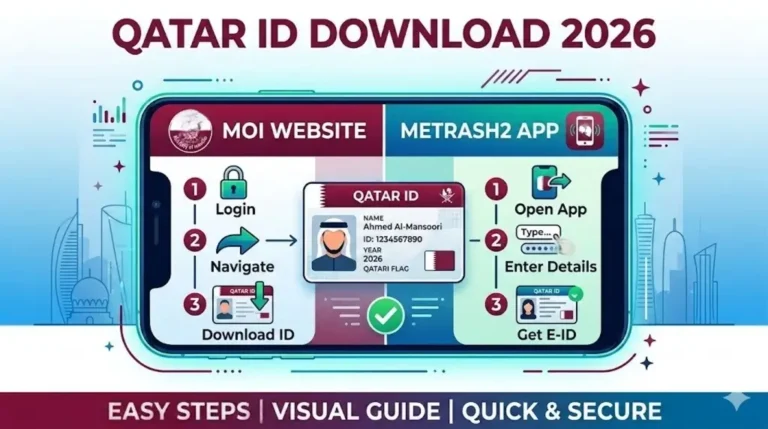
Important note on grace periods: qater idi download
The grace period for expired vehicle registration is now only 30 days. After that, enforcement kicks in automatically. With digital systems now linking QID records to vehicle ownership, documentation gaps surface faster than they once did. Check your paperwork regularly – not just when you think it is due.
Reckless or Dangerous Driving
Reckless driving is not one specific action – it is a category of behaviour that puts other road users at serious risk.
What counts as reckless driving:
- Sudden lane switching without signalling
- Tailgating other vehicles at close range
- Racing on public roads
| Violation | Fine (QAR) |
|---|---|
| Reckless or dangerous driving | Up to 6,000 |
Qatar’s highways are fast and wide, which makes aggressive driving particularly dangerous. The fine exists because driver behaviour – not mechanical failure – is the common thread in the majority of serious road accidents. Respect for other road users is a legal obligation here, not just courtesy.
Understanding the Black Point System
Qatar uses a demerit system to track violations across every driver’s record over time. It is not just about individual fines – it is about the pattern.
How the system works:
- Every violation carries a set number of black points
- Points accumulate over a rolling 12-month period
- Reaching 14 points triggers an automatic 3-month license suspension
- Repeated suspensions can lead to permanent revocation of driving privileges in the State of Qatar
Black points by violation:
| Violation | Black Points |
|---|---|
| Running a red light | 7 |
| Illegal parking (disabled spot) | 3 |
| Mobile phone use / seat belt | 0 – 3 |
| Overspeeding (30+ km/h over) | 1 per bracket |
| Expired vehicle registration | 2 |
Two or three moderate violations in a short window can bring you close to suspension without you realising it. Track your points through the Metrash2 app or MOI website regularly.
Discount Schemes & Payment Plans
The MOI periodically offers structured relief on outstanding fines, and it is worth knowing how these work before you dismiss a fine as too expensive to deal with.
Key details of the discount scheme:
- A 50% discount on fines is occasionally offered during specific periods such as Ramadan or Qatar National Day
- Discounts generally apply only to fines older than 30 days
- Serious violations such as running red lights may be excluded from discount offers
- Payments can be made through the Metrash2 app or MOI website
If you have older fines sitting unresolved, a discount period is exactly the right moment to clear them. Waiting beyond the window means paying the full amount – and risking exit restrictions if travel comes up.
Key Traffic Violations & Fines Table (2026)
Here is a full reference of the most important violations, their fines, black points, and any additional penalties.
| Violation | Fine (QAR) | Black Points | Additional Penalty |
|---|---|---|---|
| Running a red light | 6,000 | 7 | Risk of vehicle impoundment |
| Overspeeding (30+ km/h over limit) | 800 – 1,000 | 1 per bracket | — |
| Using mobile phone while driving | 500 – 5,000 | 0 – 3 | — |
| Not wearing a seat belt | 500 – 5,000 | 0 – 3 | — |
| Illegal parking (disabled spot) | 1,000 | 3 | Strictly enforced in malls and parks |
| Expired vehicle registration | 1,500 | 2 | 30-day grace period only |
| Driving without a valid license | Up to 3,000 | — | — |
| Reckless or dangerous driving | Up to 6,000 | — | — |
| General illegal parking | 300 | — | — |
| Vehicle modification (noise) | Varies | — | Impoundment up to 90 days |
Tips to Avoid Traffic Fines in Qatar
Staying fine-free in Qatar is less about luck and more about building a few consistent habits.
- Check the Metrash2 app weekly do not wait for a checkpoint or airport to surface a fine you did not know about
- Respect speed limits everywhere, not just in zones where you expect cameras
- Keep your mobile phone off your hand entirely while driving hands-free devices are affordable and widely available
- Seat belts on before the car moves every passenger, every trip, including the back seat
- Park only in designated areas always check road signs near restricted zones, driveways, and disabled spaces
- Keep vehicle registration and residency documents current – the grace period is shorter than it used to be
- Use the official MOI portal or Metrash2 to check fines by vehicle number or QID details
- If discount periods are announced during Ramadan or Qatar National Day, use them to clear older outstanding fines
FAQS
What is the most common traffic violation in Qatar? Speeding is the most frequently recorded violation in Qatar, followed closely by mobile phone use while driving. Both are captured extensively by the Unified Radar Systems and account for a large share of black points accumulated by drivers each year.
How can I check my traffic fines in Qatar? You can check outstanding fines through the Qatar Ministry of Interior’s official portal using your vehicle number or QID details. The Metrash2 app is the easiest option for most residents – it shows all fines linked to your record and allows direct payment from your phone.
What happens if I run a red light in Qatar? Running a red light results in a 6,000 QAR fine and 7 black points. In cases where the violation posed significant risk, vehicle impoundment may also apply. Since the suspension threshold is 14 points within 12 months, one red light violation puts you halfway there immediately.
Are rear passengers required to wear seat belts in Qatar? Yes. Qatar traffic laws require all passengers front and rear to wear seat belts. Drivers are legally responsible for ensuring compliance across the entire vehicle, and there are no exemptions for back seat occupants.
Can I be stopped from travelling because of a traffic fine? Yes. Outstanding fines linked to your QID or vehicle can result in an exit restriction at any border point, including Hamad International Airport. All fines must be settled at least 24 hours before travel through the Metrash2 app or MOI website.
What is the black point limit before license suspension in Qatar? Accumulating 14 black points within a rolling 12-month period leads to an automatic 3-month license suspension. Repeated suspensions can eventually result in permanent revocation of your driving licence in Qatar.
Does Qatar offer discounts on traffic fines? Yes, the MOI periodically offers a 50% discount on fines during specific periods such as Ramadan and Qatar National Day. These discounts typically apply to fines older than 30 days, and serious violations like red light offences may be excluded.
What should I do if my vehicle has a modified exhaust? If your vehicle’s exhaust system exceeds Qatar’s legal decibel limits, it can be seized immediately and impounded for up to 90 days. You would need to pay both a fine and a release fee to recover the vehicle. It is strongly advisable to have the modification reversed before driving on Qatar’s roads.
Conclusion
Qatar’s traffic laws in 2026 are stricter, smarter, and more connected than ever before. From AI-powered cameras detecting multiple violations in a single pass to real-time exit restrictions at Hamad International Airport, the enforcement infrastructure leaves very little room for oversight.
The good news is that staying compliant is genuinely straightforward. Know the speed limits, keep your phone off your hand, buckle everyone in, and check the Metrash2 app regularly. Most fines in Qatar are not the result of reckless behaviour they are the result of small habits that drivers have not updated to match the current enforcement environment.
Faraz khan 
faraz khan is a researcher and writer specializing in MOI Qatar traffic violations and fines. He shares simple guides on how to check traffic violations, understand fines, and pay penalties online through the MOI portal. His goal is to help drivers in Qatar easily manage their traffic records and avoid unnecessary penalties.